
What Is a Good LVR for a Home Loan in Australia?
If you have ever applied for a home loan in Australia, you have likely come across the term LVR. It sounds technical, but once you understand it, it becomes one of the most powerful tools in your home-buying strategy. Knowing what is a good LVR for a home loan in Australia can help you secure a lower interest rate, avoid thousands of dollars in extra fees, and put yourself in a much stronger position with lenders.
This guide breaks down everything you need to know about LVR, from what it means to how you can improve yours before applying.
What Does LVR Mean?
LVR stands for Loan-to-Value Ratio. It measures how much you are borrowing compared to the value of the property you want to buy. Lenders express it as a percentage.
Here is how you calculate it:
LVR = (Loan Amount divided by Property Value) x 100
Example: You want to buy a home worth $700,000. You have saved a deposit of $140,000, so you need to borrow $560,000.
LVR = ($560,000 divided by $700,000) x 100 = 80%
A lower LVR means you are borrowing less relative to the property’s value. That signals lower risk to the lender, and lower risk usually translates to better loan terms for you.
What Is Considered a Good LVR in Australia?
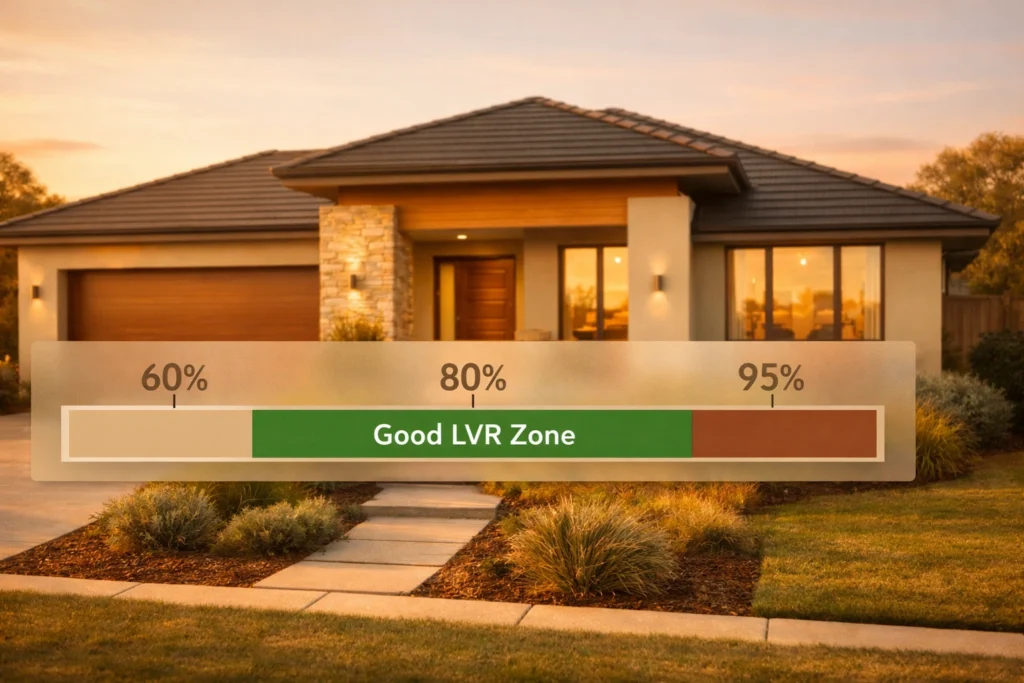
The sweet spot that most Australian lenders look for is an LVR of 80% or below. At this level, you have put down at least a 20% deposit, which tells the lender you are a lower-risk borrower.
Here is a quick breakdown of LVR ranges and what they mean:
60% or below: Excellent. You access the most competitive interest rates, and lenders treat you as a very low-risk borrower. This range is ideal for refinancers or property investors building equity.
61% to 80%: Good. You avoid Lenders Mortgage Insurance (LMI), and you qualify for strong interest rates. Most borrowers aim to sit in this range.
81% to 90%: Moderate. You will likely pay LMI, which adds a significant one-off cost to your loan. Interest rates also tend to be higher in this range.
91% to 95%: High. You can still get a loan, but expect higher interest rates, stricter lending criteria, and a substantial LMI premium. Some lenders may also require a guarantor.
Above 95%: Very high. Very few lenders offer loans at this LVR, and approval is difficult for most borrowers.
According to recent data, the average LVR across Australia currently sits at around 68%, based on an average loan size of approximately $665,978 against mean dwelling values. This shows that the typical Australian borrower is already sitting in a healthy LVR range.
Why Does LVR Matter So Much to Lenders?
LVR is one of the first things a lender examines when they assess your home loan application. It gives them a quick snapshot of their financial risk. If you default on your loan and the property needs to be sold, a lower LVR means the lender stands a much better chance of recovering the full loan amount.
This is also why lenders charge LMI when your LVR exceeds 80%. LMI is not insurance for you, the borrower. It protects the lender if you cannot make your repayments. You pay the premium, but the lender receives the benefit.
LMI costs can range from a few thousand dollars to well over $20,000 depending on your loan size and LVR, so avoiding it by reaching an 80% LVR saves you real money.
How LVR Affects Your Interest Rate
Your LVR directly influences the interest rate a lender offers you. Most lenders use LVR tiers when pricing their home loans. The lower your LVR, the lower the rate.
For example, a lender might advertise one rate for borrowers at 80% LVR and a meaningfully higher rate for borrowers sitting at 90% LVR. Over a 25- or 30-year loan term, even a small difference in the interest rate adds up to tens of thousands of dollars.
When you see a home loan advertised, check the fine print. Rates are almost always advertised based on a specific LVR, often 60% or 70%. If your LVR is higher, the rate you actually receive may be different.
Good LVR for Investment Home Loans
If you are purchasing an investment property, the same 80% LVR benchmark applies. However, lenders tend to apply stricter criteria to investment loans at high LVRs. Some lenders will not approve investment loans above 90% LVR at all, or they will price them significantly higher.
Keeping your investment loan LVR at or below 80% gives you access to better rates, a wider choice of lenders, and protects your cash flow by keeping repayments lower.
Can You Get a Home Loan With a High LVR?
Yes. Australian lenders do offer home loans up to 95% LVR. This means you only need a 5% deposit. This can help first home buyers enter the market sooner, without needing to spend years saving a larger deposit.
However, a high LVR loan comes with trade-offs: you will pay LMI, face higher interest rates, and have less equity in the property from day one.
There is also the First Home Guarantee Scheme, an Australian Government initiative that allows eligible first home buyers to purchase a property with as little as a 5% deposit without paying LMI. The government acts as a guarantor for the remaining portion of the deposit. This scheme does not reduce your LVR, but it removes the LMI cost that would normally apply.
How to Improve Your LVR Before Applying
You do not have to accept a high LVR. There are practical steps you can take to bring your LVR down before you apply for a home loan.
Save a larger deposit: This is the most direct way to reduce your LVR. Even an extra $10,000 or $20,000 in your deposit can shift your LVR meaningfully and potentially remove the LMI cost altogether.
Choose a more affordable property: Buying at a lower purchase price means your existing deposit goes further and represents a larger percentage of the property value.
Use a guarantor: A family member can use the equity in their own home as additional security for your loan. This can help you avoid LMI even with a smaller deposit.
Pay down your existing loan: If you are refinancing, making extra repayments on your current mortgage builds equity and reduces your LVR over time.
Leverage rising property values: If your property value increases, your LVR falls even if your loan balance stays the same. You can ask your lender to arrange a new valuation to reflect this.
Wait and save: Patience is a legitimate strategy. Saving for another 12 to 18 months can make a significant difference to your LVR and your long-term loan costs.
What Lenders Look at Beyond LVR
While LVR is critically important, lenders also look at a range of other factors when assessing your application. These include your credit score, your employment stability, your existing debts, your monthly expenses, and the type of property you are buying.
Some lenders also apply different LVR limits depending on where the property is located. Properties in regional areas or postcodes deemed higher risk may face stricter LVR caps than properties in major cities.
This means even if your LVR is at 80%, other factors can still affect your approval outcome. A strong LVR helps, but it works best alongside a solid credit history and a healthy financial position overall.
LVR at a Glance: Quick Reference Table
- 60% or below: Excellent. Best rates, lowest risk, no LMI.
- 61% to 80%: Good. Competitive rates, no LMI, wide lender choice.
- 81% to 90%: Moderate. LMI applies, rates increase, approval is still achievable.
- 91% to 95%: High. LMI is substantial, stricter criteria, limited lenders.
- Above 95%: Very high. Difficult to approve, specialist lenders only.
The Bottom Line
A good LVR for a home loan in Australia is 80% or below. At this level, you avoid LMI, qualify for better interest rates, and give yourself the strongest possible position when negotiating with lenders.
If your current LVR is higher, do not be discouraged. With the right strategy and some additional saving, you can work toward that 80% threshold. Whether you are a first home buyer or looking to refinance, understanding your LVR and actively managing it is one of the smartest financial moves you can make on your home ownership journey.
Always speak with a licensed mortgage broker or financial adviser before making home loan decisions. Your personal circumstances matter, and a professional can help you find the right loan structure for your situation.
Frequently Asked Questions
What is a good LVR for a home loan in Australia?
A good LVR for a home loan in Australia is 80% or below. This means you have saved at least a 20% deposit. At this level, you avoid Lenders Mortgage Insurance and access more competitive interest rates from a wider range of lenders.
What happens if my LVR is above 80%?
If your LVR exceeds 80%, most lenders will require you to pay Lenders Mortgage Insurance. This is a one-off premium that protects the lender, not you, and it can add thousands of dollars to your loan cost. You may also face higher interest rates and more limited lender options.
Can I get a home loan with a 90% or 95% LVR in Australia?
Yes, many lenders in Australia offer home loans at 90% and even 95% LVR. However, these loans come with higher interest rates, LMI costs, and stricter approval criteria. Some government schemes, like the First Home Guarantee, can help eligible buyers avoid LMI even with a low deposit.
Does LVR affect my interest rate?
Yes, directly. Lenders use LVR tiers to set interest rates. The lower your LVR, the lower your rate. Even a small reduction in your LVR can shift you into a better pricing tier and save you a significant amount of money over the life of the loan.
How can I lower my LVR quickly?
The fastest ways to lower your LVR are to save a larger deposit, buy a more affordable property, use a family guarantor, or make additional repayments on an existing loan. If your property value has increased, you can also request a new valuation from your lender, which may reduce your LVR without any extra payments.

Hi, I’m Rocky — a finance enthusiast and tech-minded writer at FinanceToolfy.com, where I help readers navigate the ever-evolving intersection of money and technology.
With a graduate-level education under my belt, I bring an analytical and research-driven perspective to everything I write. Whether I’m breaking down complex financial concepts, reviewing the latest fintech tools, or sharing practical money strategies, my goal is always the same — to make finance accessible, actionable, and genuinely useful for everyday people. Read More





One Comment