
How Does LMI Work in Australia? A Complete Guide for Home Buyers
If you have ever tried to buy a home without a 20% deposit, someone has probably mentioned LMI. It sounds like just another fee, but it has a real impact on how much you pay, when you can enter the market, and what your long-term loan looks like. This guide explains exactly how LMI works in Australia, how much it costs, and the legitimate ways you can reduce or avoid it altogether.
What Is LMI?
LMI stands for Lenders Mortgage Insurance. Despite the word “insurance” in the name, it does not protect you as the borrower. It protects your lender, the bank or financial institution, against the financial loss they would face if you default on your home loan and the sale of your property fails to cover the outstanding balance.
LMI is a one-off, non-refundable, non-transferrable premium that gets added to your home loan. The lender calculates it based on the size of your deposit and the total amount you borrow. Commbank
In simple terms: the bank takes a bigger risk when you borrow with a small deposit. LMI is how they cover that risk, and they pass the cost on to you.
When Does LMI Apply?
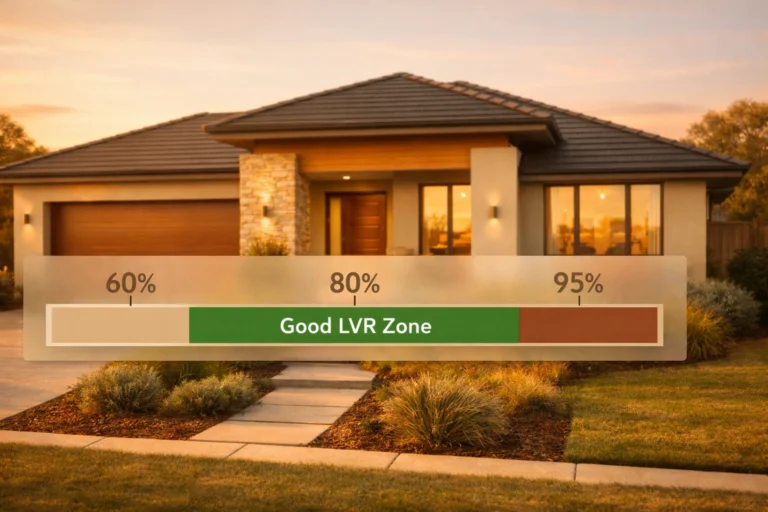
The trigger for LMI in Australia is your Loan-to-Value Ratio, or LVR. Your LVR is the percentage of the property’s value that you are borrowing.
If you have a deposit of 20% or more, meaning your LVR sits at 80% or below, you typically will not need to pay LMI. This is because a lower LVR represents less risk to the lender. Masonfinancegroup
Once your LVR goes above 80%, meaning your deposit is less than 20% of the purchase price, your lender will almost certainly require LMI before approving your loan.
Example: You want to buy a property worth $600,000. A 20% deposit equals $120,000. If you only have $60,000 saved, you are borrowing 90% of the property’s value. That 90% LVR sits well above the 80% threshold, so LMI kicks in.
According to the Australian Prudential Regulation Authority, roughly 40% of new home loans written each year carry an LVR above 80%, which means the majority of first home buyers face LMI when entering the market.
How Does the LMI Process Actually Work?
Here is the step-by-step process from application to settlement:
Step 1 — You apply for a home loan with a deposit below 20%.
Step 2 — Your lender assesses your application and determines your LVR.
Step 3 — The lender arranges LMI through an approved insurer. Borrowers have no say in the choice of insurer, with lenders selecting providers, usually Genworth, QBE, or Helia. Savings.com.au
Step 4 — The LMI premium gets calculated based on your LVR and loan amount.
Step 5 — You either pay the premium upfront at settlement or it gets added (capitalised) on top of your home loan.
Step 6 — If you later default and the property sells for less than your outstanding loan balance, the insurer pays the lender the shortfall.
It is important to note that only the lender can make a claim under the LMI policy, not you as the borrower. NAB If the insurer pays out a claim on your behalf, they may then pursue you to recover that amount.
How Much Does LMI Cost in Australia?
LMI is not a flat fee. The cost scales with two main variables: your LVR and your total loan amount. The higher you borrow and the smaller your deposit, the more expensive LMI becomes.
Based on analysis by Money.com.au, LMI can cost around 1% to 5% of your home loan amount, depending on your LVR. Money.com.au
To put that in real numbers:
— A $500,000 loan with a 10% deposit could attract LMI of over $10,000.
— A $600,000 home purchased with a 5% deposit could result in an LMI premium of around $25,000, depending on your lender and circumstances. OwnHome
— LMI can cost up to 6.5% of the loan amount in higher-risk scenarios. NAB
On top of the base premium, most states also charge stamp duty on the LMI premium itself, which adds another layer to the total cost.
Upfront vs. Capitalized — Which Is Better?
You generally have two ways to pay LMI.
Paying LMI upfront means a larger initial outlay but saves you money in the long run because you avoid paying interest on the LMI premium. Adding LMI to your home loan lets you spread the cost over the life of the loan and reduces the immediate financial impact, but you pay more over time due to interest charged on that capitalized amount. Masonfinancegroup
For a $630,000 loan with a capitalised LMI premium of around $26,740, the additional interest over a 30-year loan term at 5.5% per annum can amount to over $54,000 more compared to paying the LMI upfront. That is a significant difference worth factoring into your decision.
Does LMI Protect You as the Borrower?
No. This is one of the most common misconceptions about LMI in Australia, and it is worth being absolutely clear about.
LMI is a one-off insurance premium that protects the lender, not the borrower. If a borrower defaults on their home loan and the sale of the property does not cover the outstanding balance, LMI covers the lender for the shortfall. Loanbrite
If you want insurance that actually protects you in cases of illness, job loss, or death, that product is called Mortgage Protection Insurance (MPI), which is separate from LMI entirely.
Can You Get a Partial LMI Refund?
In limited circumstances, yes. If your settlement or drawdown date was on or after 10 June 2024, you can receive a 40% refund of your LMI premium if you repay and close your home loan within 12 months of settlement. After 12 months, no refund applies. NAB
This partial refund only applies in specific situations, typically when a borrower sells quickly or refinances early. LMI is otherwise non-refundable and non-transferable, meaning you cannot carry it to a new lender if you switch.
How to Avoid or Reduce LMI in Australia
Paying LMI is not always avoidable, but there are several well-established strategies that can help you reduce the cost or bypass it entirely.
Save a 20% Deposit
The most straightforward method is saving until your deposit reaches 20% of the purchase price. You pay zero LMI, you borrow less, and your overall interest costs drop over the life of the loan. The challenge is time. According to CoreLogic’s 2024 Housing Affordability Report, the average time to save a 20% deposit in Sydney now exceeds 11 years, and in Melbourne it exceeds 9 years. Stryve For many buyers, waiting that long is simply not practical.
Use the Government’s Home Guarantee Scheme
The Australian Government runs the Home Guarantee Scheme (HGS), which includes several pathways to buy with a smaller deposit and no LMI.
The First Home Guarantee allows eligible first-home buyers to purchase a home with a deposit as low as 5% without paying LMI. Housing Australia guarantees the remaining portion of the loan up to the threshold. Money.com.au
The Family Home Guarantee supports eligible single parents or single legal guardians to buy a home with a deposit as low as 2% and no LMI. The Regional First Home Buyer Guarantee extends similar support to eligible buyers in regional areas. Money.com.au
From 1 October 2025, the income caps that previously restricted eligibility — $125,000 for singles and $200,000 for couples — have been removed entirely, making the scheme more accessible to a wider range of buyers. Hunter Galloway
Use a Guarantor
Having a family member use their property as security for your loan is a popular way to have LMI fees waived. A guarantor provides the lender with extra security, reducing the perceived risk of the loan below the LMI threshold. Masonfinancegroup
Check for Professional LMI Waivers
Some banks and lenders offer LMI waivers for professionals in certain secure or high-paying industries, commonly legal and medical practitioners, and finance and accounting professionals. Banks that offer LMI waivers for professionals include ANZ, NAB, and Westpac. Money.com.au
Choose Certain Lenders
Some lenders occasionally offer low or no LMI home loans for borrowers with less than a 20% deposit. For example, Ubank offers no LMI on owner-occupied home loans with an LVR of up to 85% on select products, subject to conditions. Money.com.au A mortgage broker can help you identify these options quickly.
Is Paying LMI Ever Worth It?
Sometimes, yes. Paying LMI to enter the market sooner can actually save money in a rising property market.
If property prices are rising quickly, getting into the market after saving only the minimum deposit and paying LMI may end up saving you more than the cost of LMI itself, particularly where property values are appreciating faster than you can accumulate savings. Savings.com.au
The decision comes down to your local market conditions, your financial position, and how long it would realistically take you to save a larger deposit. If prices are climbing faster than your savings rate, LMI can be a calculated and sensible trade-off.
LMI vs. MPI — Know the Difference
These two products are frequently confused because they both relate to mortgages and both involve insurance premiums.
LMI (Lenders Mortgage Insurance) — Protects the lender if you default and the property sells for less than the loan balance. You pay the premium. You receive no benefit.
MPI (Mortgage Protection Insurance) — Protects you, the borrower, if you cannot meet repayments due to unemployment, serious illness, injury, or death. You pay the premium. You or your family receive the benefit.
If you hold LMI and later experience financial hardship, LMI does nothing to protect your home or your credit record. MPI is the product that covers you personally.
Conclusion
LMI kicks in when your deposit falls below 20% of the property’s purchase price. It protects your lender, not you. The cost ranges from 1% to over 6% of your loan amount, depending on your LVR. You can pay it upfront or add it to your loan, with the upfront option saving more over time. You can avoid LMI through a 20% deposit, the Home Guarantee Scheme, a guarantor, a professional waiver, or certain lender products. In rising markets, paying LMI to buy sooner can sometimes outweigh the cost of waiting.
Understanding how LMI works in Australia gives you real power when you sit across the table from a lender. You know what the cost is, why it exists, and precisely how to work around it.
FREQUENTLY ASKED QUESTIONS
Is LMI tax-deductible in Australia?
LMI may be tax-deductible if you purchase an investment property, as it can be treated as a borrowing cost spread over five years or the life of the loan, whichever is shorter. For owner-occupied properties, LMI is generally not tax-deductible. You should always speak with a qualified accountant to confirm your specific situation.
What happens to my LMI if I refinance my home loan?
LMI is non-transferable. If you refinance with a new lender and your LVR is still above 80% at the time of refinancing, you will likely need to pay a new LMI premium with your new lender. This is one of the hidden costs of refinancing early that buyers often overlook.
Does paying LMI mean my home loan is approved?
No. LMI approval and home loan approval are separate processes. The LMI insurer assesses your application independently and can decline to insure the loan even if your lender is willing to approve it. In practice, this can result in a loan being declined even after initial lender approval.
Can I negotiate the LMI premium with my lender?
Generally, no. The lender selects the LMI provider and the premium is set by that insurer based on your LVR and loan amount. Borrowers have no ability to shop around for a better LMI rate or negotiate the premium directly. Your best strategy is to reduce your LVR, use a scheme, or choose a lender that offers lower-LVR LMI exemptions.
What is the difference between LMI and a low deposit premium?
Some lenders, particularly the Commonwealth Bank, charge a Low Deposit Premium (LDP) instead of LMI on certain products. Both serve the same purpose, covering the lender against default risk on high-LVR loans, but they are structured differently. An LDP is a lender-owned product rather than a third-party insurance policy. The cost and application process are similar, but the product name and structure differ between institutions.

Hi, I’m Rocky — a finance enthusiast and tech-minded writer at FinanceToolfy.com, where I help readers navigate the ever-evolving intersection of money and technology.
With a graduate-level education under my belt, I bring an analytical and research-driven perspective to everything I write. Whether I’m breaking down complex financial concepts, reviewing the latest fintech tools, or sharing practical money strategies, my goal is always the same — to make finance accessible, actionable, and genuinely useful for everyday people. Read More




One Comment