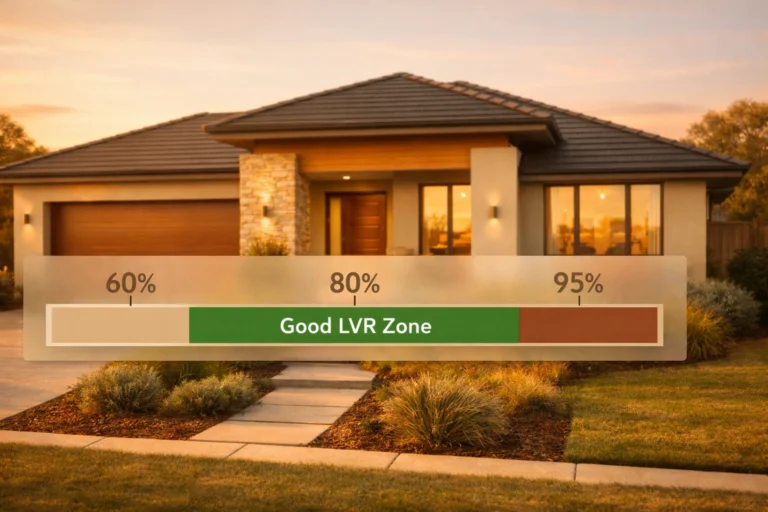
Fixed vs Variable Rate Home Loan in Australia 2026: Which One Should You Choose?
Picking the right home loan in Australia right now is not just a financial decision. It is one of the most important choices you will make for your family’s future. With the Reserve Bank of Australia (RBA) raising the cash rate again in March 2026, thousands of Australian borrowers are asking the same question: should I lock in a fixed rate, or ride out the uncertainty on a variable rate?
This guide cuts through the noise and gives you a clear, honest breakdown of both options so you can make a confident choice.
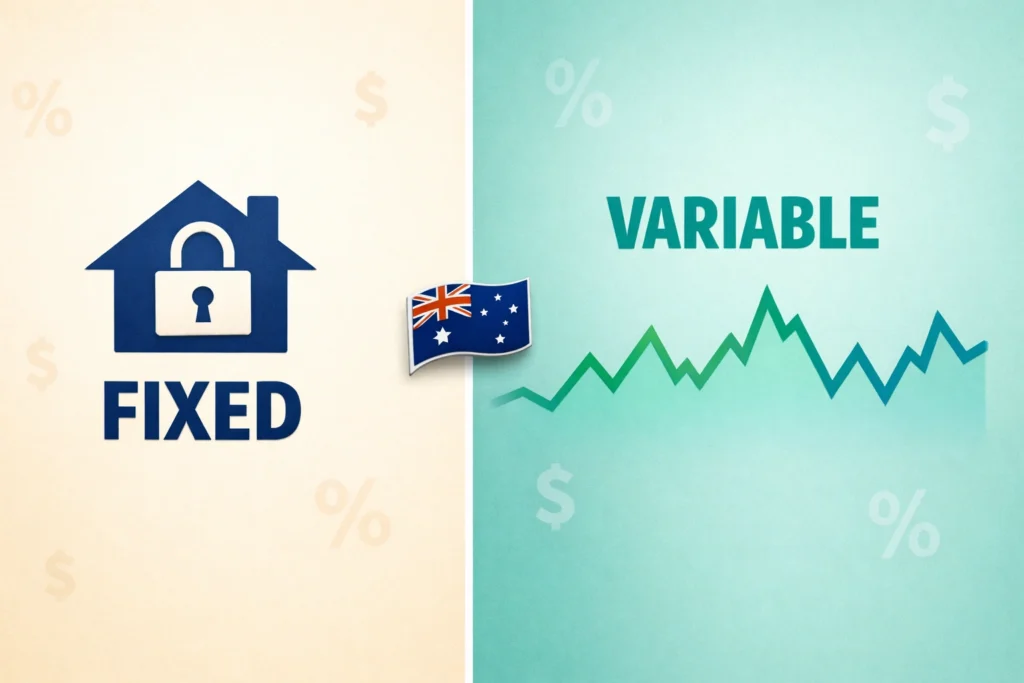
What Is a Fixed Rate Home Loan?
A fixed rate home loan locks your interest rate in place for a set period, usually between one and five years. During that time, your repayments stay exactly the same, no matter what the RBA does with the cash rate.
Think of it as a financial safety net. You know exactly how much you owe each month, which makes budgeting simple and stress-free.
Key features of a fixed rate loan:
- Repayments stay the same throughout the fixed term
- Protection against rate rises during your fixed period
- Limited ability to make extra repayments (most lenders cap this at $10,000 per year)
- No offset account in most cases
- Break costs apply if you exit the loan early
- At the end of the term, your loan rolls over to a variable rate unless you refix
Fixed rate loans suit borrowers who value certainty above all else, especially first home buyers working to a tight household budget.
What Is a Variable Rate Home Loan?
A variable rate home loan moves with the market. When the RBA cuts the cash rate, your repayments can fall. When it raises rates, your repayments go up. Your lender makes this call, and they take more than just the RBA’s decision into account. They also factor in their own funding costs, competition among lenders, and broader economic conditions.
Variable rate loans are the most common home loan choice in Australia. According to the RBA, around 98% of new owner-occupier loans are currently on a variable rate.
Key features of a variable rate loan:
- Rate moves up or down based on market conditions
- Unlimited extra repayments allowed in most cases
- Access to offset accounts, which reduce the interest you pay
- Redraw facilities let you access extra repayments if you need them
- Easier and cheaper to refinance
- Greater flexibility if your financial situation changes
Variable loans suit borrowers who want flexibility, who plan to make extra repayments, or who believe rates may fall in the near future.
Fixed vs Variable Rate Home Loan Australia 2026: The Current Landscape
This is where 2026 makes things interesting.
The RBA raised the official cash rate by 0.25% in March 2026. Several major banks including CommBank and Macquarie have already passed this increase on to their variable rate customers, effective late March and early April 2026. Economists at three of Australia’s four big banks are predicting at least one more rate rise before the year is out.
This environment changes the calculation significantly. Rising rates generally make fixed loans more attractive, because they protect you from further increases. However, fixed rates are also priced by lenders to reflect expected future movements, which means fixed rates may already be higher than current variable rates.
In short: you pay a premium for certainty. The question is whether that premium is worth it for your situation.
Side-by-Side Comparison: Fixed vs Variable
Certainty of repayments
- Fixed: Yes, for the term
- Variable: No, repayments can change
Protection from rate rises
- Fixed: Yes
- Variable: No
Benefit from rate drops
- Fixed: No
- Variable: Yes
Extra repayments
- Fixed: Limited (usually $10,000/year)
- Variable: Unlimited in most cases
Offset account
- Fixed: Rarely available
- Variable: Commonly available
Redraw facility
- Fixed: Usually not available
- Variable: Available on most loans
Break costs
- Fixed: Yes, can be significant
- Variable: None or minimal
Flexibility to refinance
- Fixed: Limited
- Variable: High
Loan term
- Fixed: 1 to 5 years, then reverts
- Variable: Up to 30 years
The Split Loan Option: Best of Both Worlds?
If you cannot decide, you do not have to. A split home loan lets you divide your borrowing into two portions. One sits on a fixed rate for certainty, and the other stays on a variable rate for flexibility.
For example, you might fix 60% of a $600,000 loan and keep the remaining 40% on a variable rate. This way, you protect most of your repayments from further rate rises while still being able to use an offset account and make extra repayments on the variable portion.
Survey data from 2026 shows that 9% of Australian borrowers are now planning a split loan strategy. It is a practical middle ground for people who want both stability and flexibility.
Who Should Choose a Fixed Rate in 2026?
A fixed rate home loan suits you if:
- You are a first home buyer adjusting to new mortgage repayments and need budget certainty
- Your household income is stable but not flexible enough to absorb rate rises
- You believe rates will continue to rise through 2026 and into 2027
- You do not plan to sell, refinance, or pay off the loan early during the fixed term
- Peace of mind matters more to you than chasing the lowest possible rate
Who Should Choose a Variable Rate in 2026?
A variable rate home loan suits you if:
- You want the flexibility to make extra repayments and pay down your loan faster
- You want to use an offset account to reduce your interest charges
- You are likely to refinance or move within the next few years
- You can absorb potential repayment increases without financial stress
- You believe the current rate cycle is near its peak and cuts may come in 2027
Despite the uncertainty, research shows that 56% of Australian mortgage holders intend to stay on a variable rate in 2026 and ride out the volatility.
The Real Cost: A Simple Example
Imagine you take out a $550,000 home loan over 30 years.
On a variable rate of 6.20% p.a., your monthly repayment sits at roughly $3,370.
If rates rise by a further 0.25%, that repayment climbs to around $3,455 per month.
On a fixed rate of 6.50% p.a. for two years, your repayment stays steady at roughly $3,476 per month throughout the fixed term, regardless of what the RBA does.
The fixed rate costs more upfront. But if the RBA raises rates twice more during that two-year period, the variable borrower ends up paying more. This is the core trade-off in every fixed vs variable rate home loan decision in Australia.
Tips for Choosing the Right Home Loan in 2026
Always compare the comparison rate, not just the advertised rate. The comparison rate includes fees and gives a more accurate picture of the loan’s true cost.
Factor in your break-even point. If you plan to sell or refinance within two years, break costs on a fixed loan can wipe out any savings.
Build a buffer. Whether you go fixed or variable, make sure your budget can handle a rate rise of at least 2% to 3% on top of your current repayment.
Speak to a mortgage broker. The Australian home loan market has hundreds of products. A broker can compare options across multiple lenders and find a deal that matches your goals.
Read the fine print on fixed loans. Break costs on a fixed rate loan can run into thousands of dollars. Understand exactly what triggers these costs before you sign.
Conclusion
There is no single right answer to the fixed vs variable rate home loan debate in Australia in 2026. The right choice depends entirely on your personal financial situation, your risk tolerance, and your plans for the years ahead.
If you need certainty and protection from further rate rises, a fixed rate gives you that. If you want flexibility, the ability to make extra repayments, and access to offset features, a variable rate delivers that instead.
The split loan option remains the most practical solution for borrowers who want a foot in both camps.
Whatever you decide, act with full information, compare the market thoroughly, and consider speaking to a licensed mortgage broker before you commit.
FREQUENTLY ASKED QUESTIONS
What is the main difference between a fixed and variable rate home loan in Australia?
A fixed rate loan locks your interest rate for a set period, usually one to five years, so your repayments stay the same. A variable rate loan moves with market conditions and the RBA cash rate, meaning your repayments can go up or down over time.
Is it better to fix or go variable in 2026 in Australia?
With the RBA raising rates in March 2026 and further increases predicted, fixing part or all of your loan can offer protection. However, variable loans still offer greater flexibility and offset account benefits. The best choice depends on your income stability, plans to refinance, and ability to absorb repayment changes.
Can I switch from a variable to a fixed rate home loan?
Yes. Most Australian lenders allow you to switch from a variable to a fixed rate, often through their online banking app. However, once you fix, break costs will apply if you want to exit the fixed term early.
What is a split home loan in Australia?
A split home loan divides your mortgage into two parts. One portion sits on a fixed rate for repayment certainty, and the other sits on a variable rate for flexibility and offset account access. You choose the ratio between the two.
Do fixed rate home loans have offset accounts in Australia?
Generally, no. Most fixed rate home loans in Australia do not offer offset accounts. This is one of the key advantages of variable rate loans. A small number of lenders offer partial offset on fixed loans, but this is not common. If an offset account is important to your financial strategy, a variable or split loan is usually the better option.

Hi, I’m Rocky — a finance enthusiast and tech-minded writer at FinanceToolfy.com, where I help readers navigate the ever-evolving intersection of money and technology.
With a graduate-level education under my belt, I bring an analytical and research-driven perspective to everything I write. Whether I’m breaking down complex financial concepts, reviewing the latest fintech tools, or sharing practical money strategies, my goal is always the same — to make finance accessible, actionable, and genuinely useful for everyday people. Read More